
 EN
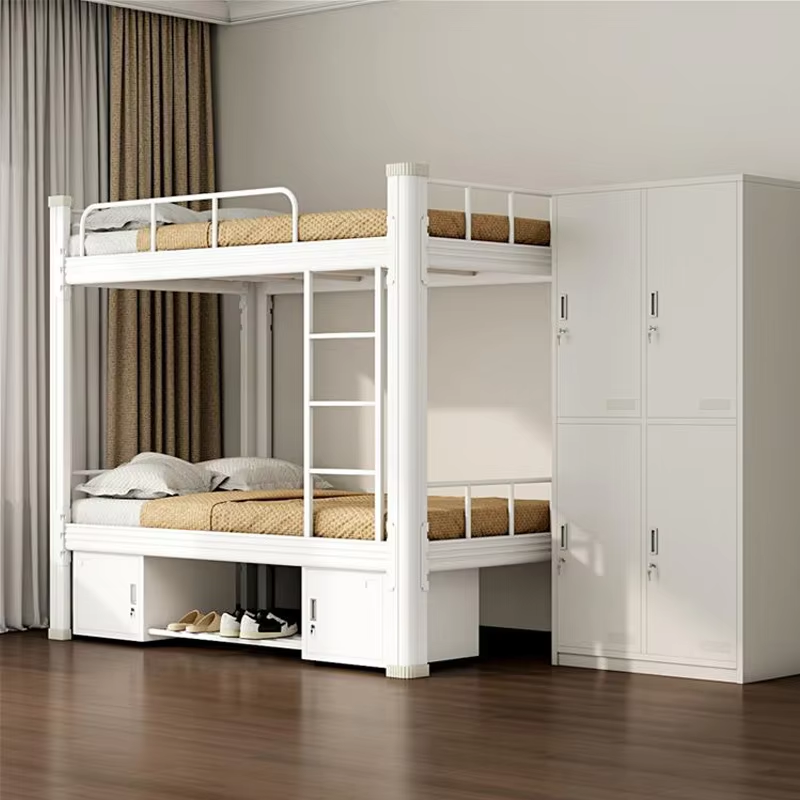
A double deck bed represents a significant investment in residential or institutional furniture, making its durability and lifespan central concerns for buyers and facility managers. Understanding what determines how long a double deck bed will perform reliably requires examining multiple interconnected factors that extend far beyond the initial purchase price. The quality of a double deck bed depends on material selection, manufacturing standards, design engineering, installation practices, and ongoing maintenance protocols. This comprehensive guide explores the critical elements that influence double deck bed longevity and helps you make informed decisions about your investment.

The durability of a double deck bed ultimately determines its value proposition over time. Industrial facilities, schools, dormitories, and residential spaces all depend on double deck bed performance to support daily usage without premature failure or safety concerns. By identifying the specific factors that govern double deck bed lifespan, you can evaluate options more strategically and predict maintenance requirements with greater accuracy. This knowledge also enables you to calculate the true cost of ownership rather than focusing solely on acquisition expenses.
Material Selection and Frame Construction
Steel and Metal Composition Standards
The foundation of any durable double deck bed lies in the quality and type of metal used in its frame. Steel thickness, alloy composition, and surface treatment all dramatically affect how a double deck bed resists corrosion, deformation, and structural failure. High-carbon steel and reinforced metal frames provide superior strength compared to lighter gauge materials, enabling a double deck bed to withstand repeated loading cycles and environmental stress. A quality double deck bed typically features steel tubing between 1.2 and 1.5 millimeters in thickness, which balances weight capacity with overall durability.
Rust prevention directly impacts how long a double deck bed remains functional in various environments. Galvanized coatings, powder coating, or chrome plating protect the underlying metal from moisture exposure and oxidation. A well-treated double deck bed resists rust formation even in humid institutional settings or coastal residential areas. Without proper surface treatment, a double deck bed can develop structural integrity issues within just two to three years of use.
Welding Quality and Joint Integrity
The welding and joinery techniques employed in manufacturing significantly determine double deck bed durability and safety. Continuous welding along load-bearing joints creates a stronger double deck bed than intermittent welds, as it distributes stress more evenly throughout the frame. A premium double deck bed features reinforced corner joints and strategic bracing that prevents wobbling, twisting, and metal fatigue. Poor welding quality in an inferior double deck bed leads to microfractures that expand under repeated use, eventually compromising structural integrity.
The certification and inspection standards followed during manufacturing reflect the expected lifespan of a double deck bed. Manufacturers who subject their double deck bed designs to rigorous load testing, stress analysis, and durability trials provide greater assurance of long-term performance. A certified double deck bed that meets industrial standards will outperform an untested alternative by years or even decades.
Load Capacity and Design Engineering
Weight Rating and Safety Margins
The specified weight capacity of a double deck bed directly influences its actual lifespan under realistic usage conditions. A double deck bed engineered with generous safety margins—typically 30 to 50 percent above rated capacity—experiences less metal fatigue and deformation during normal use. When users consistently operate a double deck bed near or exceeding its stated limits, the accelerated stress dramatically shortens its functional life. The difference between a double deck bed rated for 200 kilograms and one rated for 300 kilograms may seem marginal, but this safety buffer profoundly affects long-term durability.
Institutional settings often require double deck bed solutions capable of handling unpredictable or heavier usage patterns. A double deck bed designed with reinforced cross-bracing, thicker support beams, and optimized weight distribution maintains structural integrity even under intensive use cycles. The engineering philosophy behind any particular double deck bed model reveals much about its intended lifespan and suitable applications.
Mattress Support System Design
The mattress support structure represents a critical but often overlooked aspect of double deck bed longevity. Slats, springs, or solid supports that properly distribute mattress weight prevent premature sagging and frame stress. A well-engineered double deck bed features closely spaced support elements that maintain consistent tension across the entire frame. A poorly designed double deck bed with inadequate or unevenly spaced supports concentrates pressure at specific points, causing accelerated wear and potential structural failure.
The attachment method between support system and frame also impacts double deck bed durability significantly. Double deck bed systems using welded or bolted connections prove more durable than those using adhesive or friction-fit methods alone. Quality construction ensures that a double deck bed maintains its structural integrity through thousands of user cycles.
Usage Patterns, Maintenance, and Environmental Factors
Environmental Exposure and Humidity
The environment where a double deck bed operates profoundly influences its durability trajectory. Humid coastal environments, damp institutional facilities, or outdoor-adjacent spaces subject a double deck bed to accelerated corrosion regardless of initial material quality. A double deck bed installed in a dry, climate-controlled environment may last 20 or more years, while an identical model in harsh conditions might fail structurally within 5 to 10 years. Temperature fluctuations also stress metal components through expansion and contraction cycles, making environmental management critical for double deck bed longevity.
Moisture control and ventilation around a double deck bed setup prevent rust development and material degradation. Regular inspection for corrosion spots, rust formation, or paint damage extends double deck bed lifespan considerably. A double deck bed protected from direct water exposure, excessive humidity, and salt air will maintain its structural integrity far longer than one in exposed conditions.
Usage Intensity and Maintenance Protocols
The frequency and nature of usage directly determines how quickly a double deck bed deteriorates. High-turnover institutional settings expose a double deck bed to more stress cycles daily than typical residential use, necessarily shortening its practical lifespan. A double deck bed in a dormitory experiences different wear patterns compared to one in a private home. Proper maintenance routines for a double deck bed—including bolt tightening, surface treatment refreshes, and damage repairs—can extend usable life by five to ten years.
Preventative maintenance transforms double deck bed longevity expectations dramatically. Regular inspection protocols identify loose fasteners, paint chips, or structural issues before they become critical failures. A well-maintained double deck bed consistently outperforms neglected alternatives, regardless of initial manufacturing quality. Establishing maintenance schedules ensures that each double deck bed installation reaches its full designed lifespan potential.
FAQ
What is the typical lifespan of a quality double deck bed?
A well-manufactured double deck bed constructed from high-quality steel with proper surface protection typically lasts between 10 and 20 years in residential settings, while institutional-grade double deck bed models may reach 15 to 25 years under appropriate maintenance. The actual lifespan depends heavily on usage intensity, environmental conditions, and adherence to maintenance protocols. A double deck bed subjected to harsh conditions or poor maintenance may fail structurally within 5 to 8 years, while one in optimal conditions could function for 30 years or longer.
How do I identify a durable double deck bed before purchase?
Examine the steel gauge thickness, welding quality, surface treatment type, and weight capacity specifications when evaluating any double deck bed option. Request information about the manufacturing standards and load-testing procedures used for the double deck bed model. Inspect the double deck bed in person if possible, checking for solid welding seams, secure fasteners, and even mattress support distribution. Manufacturer certifications and customer reviews about long-term double deck bed performance provide valuable insights into expected durability.
Can maintenance really extend a double deck bed's lifespan?
Yes, consistent maintenance practices significantly extend double deck bed longevity and prevent premature failures. Regular inspections, bolt tightening, surface coating refreshes, and prompt repair of damage allow a double deck bed to reach or exceed its designed lifespan. A double deck bed receiving monthly maintenance checks will outperform an identical model that receives no attention by years or decades. Environmental protection and immediate rust treatment also help maintain double deck bed structural integrity throughout its service life.