
 EN
EN
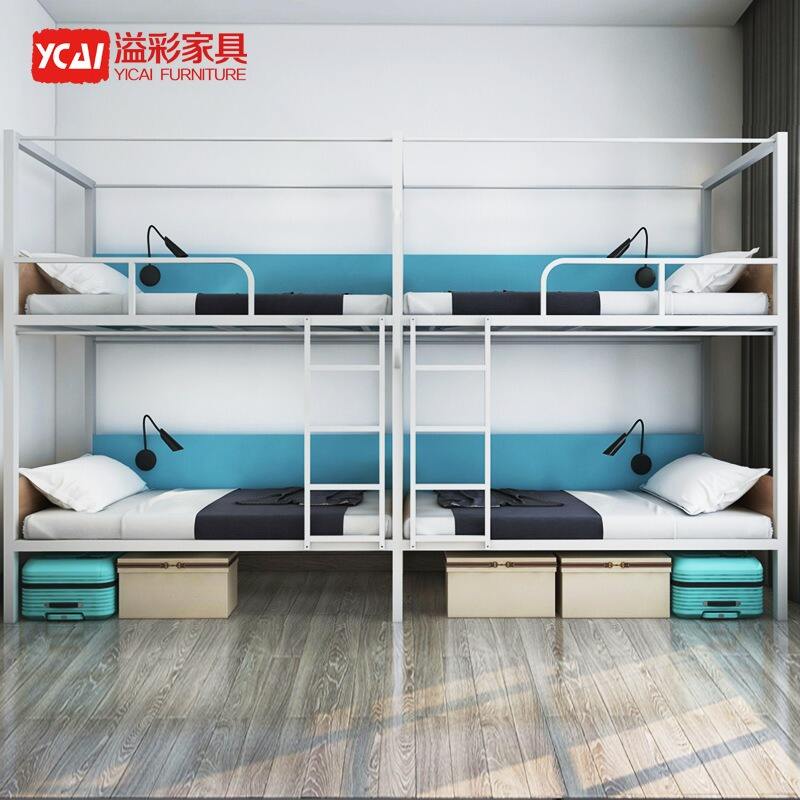
When selecting a bunk bed for a home, dormitory, or commercial setting, one of the most critical yet frequently overlooked specifications is weight capacity. Understanding what determines how much load a bunk bed can safely support is essential not only for user safety but also for making a sound purchasing decision. Weight capacity is not a single fixed number assigned arbitrarily by manufacturers — it is the result of multiple interacting structural, material, and design variables that work together to define the bed's true load-bearing potential.

Whether you are outfitting a children's room, a college dormitory, a vacation rental, or a military barracks, the weight capacity of a bunk bed directly affects how long the product will last, how safely it performs under daily use, and whether it meets the needs of its intended occupants. This article breaks down the key factors that determine bunk bed weight capacity so that buyers, facility managers, and interior specifiers can make fully informed decisions.
Frame Material and Its Role in Load-Bearing Strength
Metal Frames and Structural Integrity
The material used to construct the frame is arguably the single most influential factor in determining how much weight a bunk bed can support. Metal frames, particularly those made from heavy-gauge steel, are widely recognized for their superior load-bearing capabilities. The thickness of the steel tubing, measured in gauge, directly correlates with strength — a lower gauge number indicates thicker, stronger steel. A bunk bed built with 14-gauge steel will consistently outperform one built with 18-gauge steel under equivalent load conditions.
Heavy-duty metal bunk bed designs are commonly rated to support between 400 and 600 pounds per sleeping surface, with some commercial-grade models exceeding those figures. The rigidity of metal also means that the frame resists flex and deformation over time, which is critical for maintaining structural integrity across years of use. Welded joints in metal frames further enhance strength by eliminating the weak points that can develop in bolt-only assemblies.
For adult users or high-traffic environments, a full-size or queen-size metal frame bunk bed is typically the most appropriate choice. The combination of a wider sleeping surface and a robust steel structure ensures that the bunk bed can accommodate the weight and movement patterns of adult occupants without compromising safety.
Wood Frames and Their Limitations
Solid wood bunk bed frames offer a different set of structural characteristics. Hardwoods such as oak, maple, and beech provide reasonable strength and are commonly used in residential bunk bed designs. However, wood is more susceptible to moisture, warping, and joint fatigue over time, which can gradually reduce the effective weight capacity of the structure. The quality of the joinery — whether mortise-and-tenon, dowel, or bolt-based — plays a significant role in how well a wooden bunk bed maintains its rated capacity over its lifespan.
Engineered wood products such as MDF or particleboard are generally not suitable for high-capacity bunk bed construction. These materials lack the tensile strength needed to handle dynamic loads — the kind generated by a person climbing, shifting, or sitting up suddenly. For applications where weight capacity is a primary concern, solid hardwood or metal remains the preferred choice.
Structural Design and Engineering Principles
Post Diameter, Cross-Bracing, and Frame Geometry
Beyond raw material strength, the geometric design of the bunk bed frame plays a decisive role in its weight capacity. Vertical posts that are wider in diameter distribute compressive loads more effectively, reducing the risk of buckling under heavy use. Cross-bracing — diagonal or horizontal supports connecting the vertical posts — significantly increases lateral stability and prevents the frame from racking or twisting under load.
A well-engineered bunk bed uses triangulated support structures wherever possible, since triangles are inherently the most stable geometric form in load-bearing applications. The spacing and number of slats supporting the mattress also contribute to the overall capacity. Closely spaced slats distribute weight more evenly across the frame, reducing stress concentration at any single point. Slat systems with center support legs that contact the floor provide an additional load path, further increasing the effective capacity of the sleeping surface.
The height of the bunk bed also matters. Taller frames introduce greater leverage forces on the joints and posts, which can reduce the effective load capacity if the design does not compensate with additional bracing or thicker materials. This is why loft-type bunk bed designs intended for adult use typically feature reinforced post connections and additional mid-frame supports.
Joint Quality and Assembly Method
The method by which frame components are joined together is a critical but often invisible determinant of bunk bed weight capacity. Fully welded metal joints create a continuous structural connection that is far stronger than bolted connections under dynamic loading. In contrast, bolt-based assemblies rely on the friction and clamping force of the fasteners, which can loosen over time with repeated use.
For bunk bed designs that use bolt assembly — which is common for shipping and installation convenience — the quality of the hardware matters enormously. High-tensile bolts, locking nuts, and reinforced connection plates all contribute to maintaining joint integrity over the product's service life. Regular inspection and re-tightening of fasteners is recommended for bolt-assembled bunk bed frames to preserve their rated capacity.
Mattress Support System and Slat Configuration
Slat Thickness, Spacing, and Material
The mattress support system is the direct interface between the occupant's weight and the bunk bed frame. Slat thickness and material determine how effectively this system transfers load to the frame without deflecting excessively or breaking. Solid wood slats of at least 0.75 inches in thickness are generally recommended for standard residential bunk bed applications, while heavier-duty models may use thicker slats or steel grid supports.
Slat spacing is equally important. Gaps wider than three inches between slats can allow mattress material to sag into the gaps over time, creating uneven support and increasing stress on individual slats. For a bunk bed intended to support adult users, a tighter slat spacing or a solid platform base is preferable. Some high-capacity bunk bed models replace traditional slats entirely with a welded steel mesh or perforated steel platform, which offers superior load distribution and virtually eliminates the risk of slat failure.
Center Support and Floor Contact Points
For full-size and queen-size bunk bed configurations, a center support leg that extends from the middle of the sleeping surface to the floor is a meaningful structural enhancement. This support leg creates an additional load path that bypasses the lateral frame members entirely, effectively increasing the weight capacity of the sleeping surface by transferring load directly to the floor. Without this support, the full weight of the mattress and occupant must be carried by the side rails and their connections to the vertical posts.
The presence or absence of a center support leg is often the difference between a bunk bed rated at 250 pounds per bunk and one rated at 500 pounds or more. Buyers evaluating high-capacity bunk bed options should confirm whether center support is included in the design, particularly for wider sleeping surfaces where the unsupported span of the slat system is greater.
Size Configuration and Its Impact on Capacity Ratings
Twin, Full, and Queen Size Differences
The size of the sleeping surface has a direct relationship with the structural demands placed on the bunk bed frame. A twin-size bunk bed has a narrower sleeping surface, which means shorter slat spans and less lateral stress on the side rails. As the sleeping surface widens to full or queen size, the unsupported span increases, and the frame must be engineered accordingly to maintain equivalent weight capacity.
A queen-size bunk bed designed for adult use requires substantially more robust construction than a twin-size model intended for children. The wider frame introduces greater bending moments in the side rails, and the increased sleeping surface area means that the slat system must support a larger distributed load. Manufacturers who offer queen-size bunk bed products typically address this by using heavier-gauge steel, additional cross-bracing, and reinforced slat systems.
It is important not to assume that a bunk bed rated for a certain weight on a twin configuration will carry the same rating when configured as a full or queen. Always verify the weight capacity specification for the exact size configuration being purchased, as these figures can differ significantly within the same product line.
Loft-Type Designs and Adult Use Considerations
Loft-type bunk bed designs, where the upper sleeping surface is elevated significantly above the lower level, introduce unique structural considerations. The greater height increases the leverage forces acting on the vertical posts and their connections to the floor and ceiling. For adult use, a loft-type bunk bed must be engineered with this in mind, typically featuring wider post diameters, additional diagonal bracing, and floor anchoring provisions.
Bunk bed models that include integrated stairs rather than a simple ladder also affect the structural load distribution. Stairs add weight to the frame and introduce additional load points, but they also provide a more stable means of access that reduces the dynamic impact loads associated with ladder climbing. For heavy-duty adult applications, stair-access bunk bed designs are generally preferred both for safety and for their contribution to overall structural stability.
Testing Standards and Manufacturer Specifications
Industry Testing Protocols
Reputable bunk bed manufacturers subject their products to standardized testing protocols that simulate real-world loading conditions. These tests typically include static load tests, where a fixed weight is applied to the sleeping surface for a defined period, and dynamic load tests, which simulate the impact forces generated by a person jumping or dropping onto the mattress. Compliance with standards such as ASTM F1427 in the United States or EN 747 in Europe provides buyers with a degree of assurance that the bunk bed has been evaluated against defined safety benchmarks.
However, it is important to understand that these standards establish minimum safety thresholds, not optimal performance targets. A bunk bed that merely meets the minimum standard may not be appropriate for heavy-duty or commercial applications. Buyers with demanding requirements should look for products that exceed the minimum standards or that carry additional certifications relevant to their specific use case.
Reading and Interpreting Manufacturer Weight Ratings
Manufacturer-stated weight capacities for a bunk bed are typically expressed as the maximum static load per sleeping surface. This figure represents the weight the structure can support under controlled, non-dynamic conditions. In practice, real-world use involves dynamic loads — movement, sitting, and impact — that can momentarily exceed the static load by a significant factor. A commonly applied safety principle is to select a bunk bed whose rated capacity is at least 1.5 to 2 times the expected maximum occupant weight to account for these dynamic forces.
Some manufacturers provide separate ratings for the upper and lower bunks, which may differ due to structural differences between the two levels. Always review both figures when evaluating a bunk bed for a specific application. Additionally, the weight of the mattress itself should be factored into the total load calculation, as a heavy memory foam or hybrid mattress can add 50 to 100 pounds to the sleeping surface load.
FAQ
What is a typical weight capacity for a heavy-duty adult bunk bed?
A heavy-duty adult bunk bed typically carries a weight capacity of 400 to 600 pounds per sleeping surface, with some commercial-grade models rated even higher. The exact figure depends on the frame material, gauge of steel, slat system design, and whether center support legs are included. Always verify the manufacturer's specification for the exact size and configuration you are purchasing.
Does the upper bunk of a bunk bed have a lower weight capacity than the lower bunk?
In many bunk bed designs, the upper bunk does carry a lower weight rating than the lower bunk because the upper sleeping surface is supported entirely by the frame rather than having any direct contact with the floor. The lower bunk, particularly when it has center support legs, benefits from an additional load path to the floor. Always check whether the manufacturer provides separate capacity ratings for each level.
How does mattress weight affect the overall load capacity of a bunk bed?
Mattress weight counts toward the total load on the bunk bed sleeping surface. A standard innerspring mattress may weigh 50 to 70 pounds, while a thick memory foam or hybrid mattress can weigh 80 to 120 pounds. This weight should be subtracted from the rated capacity to determine the effective weight available for the occupant. Choosing a lighter mattress can meaningfully increase the usable weight allowance for the person sleeping on the bunk bed.
Can a bunk bed designed for children safely support adult users?
A bunk bed designed specifically for children is generally not suitable for adult users. Children's models are typically built with lighter-gauge materials and lower weight ratings — often 150 to 250 pounds per bunk — that are insufficient for adult body weights combined with dynamic loading. For adult use, it is essential to select a bunk bed explicitly rated and engineered for adult occupancy, with appropriate frame construction, slat systems, and weight capacity specifications.