 EN
EN
Maintaining hygiene in a school canteen is one of the most demanding operational challenges facility managers face. With hundreds of students cycling through meal periods every day, surfaces accumulate food residue, spills, and bacteria at a rapid pace. The choice of furniture material directly determines how much labor, time, and cost goes into keeping that environment safe and presentable. Among the available options, fiberglass school canteen furniture has earned a strong reputation precisely because of how effortlessly it can be cleaned and maintained.
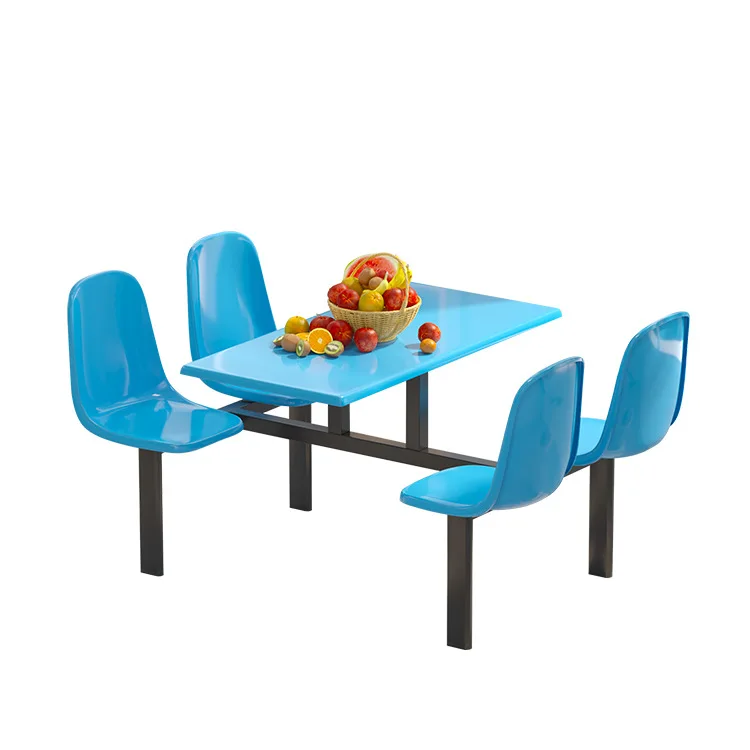
Understanding why fiberglass school canteen furniture is so easy to clean requires looking at the material science behind it, the structural design choices that support hygiene, and the practical realities of daily school operations. This article breaks down each of those dimensions so procurement officers, school administrators, and facility planners can make informed decisions grounded in real-world performance rather than surface-level assumptions.
The Material Properties That Make Cleaning Simple
A Non-Porous Surface That Resists Absorption
The single most important reason fiberglass school canteen furniture is easy to clean is the non-porous nature of the fiberglass shell. Unlike wood, which absorbs moisture and food particles into its grain, or fabric upholstery, which traps bacteria deep within its fibers, fiberglass presents a sealed, smooth surface that does not allow liquids or organic matter to penetrate.
When a student spills juice or drops food onto a fiberglass seat or tabletop, the substance sits on the surface rather than soaking in. This means a simple wipe with a damp cloth or a mild cleaning solution is sufficient to remove the contamination entirely. There is no residual staining left behind in the material structure itself.
This property is especially valuable in school canteens where cleaning windows between meal periods are short. Staff can move quickly through the dining area, wiping down fiberglass school canteen furniture in a fraction of the time it would take to clean porous alternatives. The efficiency gain is measurable and consistent across every cleaning cycle.
Chemical Resistance That Supports Thorough Sanitization
Cleaning a school canteen is not just about removing visible dirt. It also involves sanitizing surfaces to eliminate pathogens that could cause illness among students. Fiberglass school canteen furniture tolerates a wide range of cleaning agents, including diluted bleach solutions, alcohol-based disinfectants, and commercial-grade sanitizers, without degrading or discoloring.
Many alternative materials, such as certain plastics or laminates, can crack, fade, or become tacky when exposed to strong cleaning chemicals over time. Fiberglass maintains its structural integrity and surface finish even under repeated chemical exposure. This means schools can apply the sanitization protocols required by health authorities without worrying about accelerating furniture wear.
The chemical resistance of fiberglass school canteen furniture also means that cleaning staff are not forced to use weaker, less effective products to protect the furniture. They can use what actually works, which translates directly into better hygiene outcomes for the students using the space every day.
Design Features That Eliminate Hidden Dirt Traps
Smooth Contours and Seamless Molding
Fiberglass school canteen furniture is typically manufactured through a molding process that produces smooth, continuous contours without sharp internal corners, exposed joints, or recessed grooves. These design characteristics are not merely aesthetic. They are functionally critical to cleanability.
Sharp corners and deep grooves are notorious for accumulating food debris, grease, and bacteria. In a high-traffic canteen environment, those hidden accumulation points become hygiene risks that are difficult to address even with diligent cleaning. The seamless molded form of fiberglass school canteen furniture eliminates most of these problem areas by design.
When a cleaning cloth passes over the surface of a fiberglass chair or table, it covers the entire contact area without needing to navigate around complex geometry. This makes the cleaning process faster, more thorough, and less dependent on the individual technique of the person doing the cleaning.
Integrated Construction That Reduces Joint Accumulation
Many furniture types used in school canteens are assembled from multiple components joined together with screws, bolts, or adhesives. Over time, those joints loosen slightly, creating micro-gaps where food particles and moisture collect. These gaps are nearly impossible to clean thoroughly and become breeding grounds for bacteria and mold.
Fiberglass school canteen furniture is often produced with integrated seat and back shells that minimize the number of exposed joints. Where metal frames are used, the connection points are typically designed to be flush and accessible rather than recessed and hidden. This construction philosophy supports the kind of thorough cleaning that school health standards demand.
The result is a piece of furniture that does not develop hidden hygiene problems over its service life. A fiberglass school canteen chair that is five years old can be cleaned just as effectively as one that was installed last month, because the structural integrity of the surface and joints has not deteriorated in ways that create new dirt traps.
Durability That Sustains Long-Term Cleanability
Resistance to Scratching and Surface Degradation
A surface that is easy to clean when new but becomes difficult to clean after a year of use is not genuinely easy to clean. It is only temporarily easy to clean. The long-term cleanability of fiberglass school canteen furniture is supported by the material's resistance to scratching and surface degradation under normal use conditions.
Scratches on furniture surfaces create micro-channels that trap food particles and bacteria in ways that a simple wipe cannot address. Fiberglass is harder and more scratch-resistant than many competing materials, which means the smooth, non-porous surface that makes it easy to clean on day one remains largely intact after years of daily use by students.
This durability is particularly relevant in school environments where furniture is subjected to heavy use, occasional impacts, and the kind of treatment that comes with large numbers of young people using the same space repeatedly. Fiberglass school canteen furniture maintains its cleanable surface characteristics across a service life that typically spans many years.
Color Stability That Reveals Cleanliness Accurately
Fiberglass school canteen furniture is available in a range of colors that are integrated into the material rather than applied as a surface coating. This means the color does not fade, peel, or yellow in ways that make it difficult to visually assess whether a surface is actually clean.
When furniture discolors over time, cleaning staff and supervisors lose the ability to use visual inspection as a reliable hygiene check. A yellowed or faded surface can look dirty even when it is clean, or conversely, can mask contamination that blends with the degraded color. Fiberglass school canteen furniture retains its original color tone, making visual cleanliness assessment straightforward and reliable.
This color stability also contributes to the overall appearance of the canteen environment, which matters for student experience and the impression the school makes on parents and visitors. A canteen furnished with fiberglass school canteen furniture that looks as clean as it actually is sends a clear message about the institution's hygiene standards.
Operational Advantages for School Facility Management
Reduced Cleaning Time Per Meal Period
School canteens typically operate on tight schedules, with multiple meal sittings requiring rapid turnaround between groups. The ease of cleaning fiberglass school canteen furniture directly reduces the time required to prepare the dining area for the next sitting. Staff can wipe down surfaces quickly and confidently, knowing that a single pass with an appropriate cleaning cloth or solution is sufficient.
This operational efficiency has real cost implications. Fewer staff hours are needed for canteen cleaning, or the same staff can cover more ground in the same time. Over the course of a school year, the cumulative time savings from choosing fiberglass school canteen furniture over harder-to-clean alternatives can be substantial.
The reduced cleaning burden also means that cleaning is more likely to be done thoroughly and consistently. When a task is quick and straightforward, it is less likely to be rushed or skipped. The inherent cleanability of fiberglass school canteen furniture supports a culture of consistent hygiene rather than working against it.
Lower Maintenance Costs Over the Furniture Lifecycle
Beyond daily cleaning, furniture maintenance in school canteens includes periodic deep cleaning, surface treatment, and eventual replacement. Fiberglass school canteen furniture requires minimal surface treatment over its lifecycle because the material does not need sealing, waxing, or refinishing to maintain its cleanable properties.
Wood furniture, by contrast, requires periodic resealing to maintain its resistance to moisture and staining. Upholstered furniture may need professional deep cleaning or reupholstering. These maintenance requirements add cost and operational disruption that fiberglass school canteen furniture largely avoids.
The combination of low daily cleaning effort and minimal periodic maintenance makes fiberglass school canteen furniture a cost-effective choice when evaluated over a realistic service life rather than just at the point of purchase. Procurement decisions that account for total cost of ownership consistently favor materials that are easy to maintain, and fiberglass performs well on that measure.
FAQ
Can fiberglass school canteen furniture be cleaned with standard school cleaning products?
Yes. Fiberglass school canteen furniture is compatible with most standard cleaning and sanitizing products used in school environments, including diluted bleach, alcohol-based disinfectants, and general-purpose surface cleaners. The material's chemical resistance means it will not degrade or discolor under normal cleaning protocols. Always follow the cleaning product manufacturer's dilution guidelines to avoid unnecessary chemical concentration.
Does fiberglass school canteen furniture stain permanently from food and drink spills?
Permanent staining is rare with fiberglass school canteen furniture because the non-porous surface prevents liquids and food particles from penetrating the material. Most spills can be removed with a damp cloth if addressed promptly. Even dried or set spills typically respond well to a mild cleaning solution applied with light scrubbing. The color stability of fiberglass also means that cleaning does not leave behind bleached or faded patches.
How does fiberglass school canteen furniture compare to plastic in terms of cleanability?
Both materials offer non-porous surfaces, but fiberglass school canteen furniture generally outperforms standard plastic in scratch resistance, which is a key factor in long-term cleanability. Scratched plastic surfaces develop micro-channels that trap bacteria and are difficult to sanitize thoroughly. Fiberglass maintains a smoother surface over time, which means its cleanability advantage is more durable across the furniture's service life.
Is fiberglass school canteen furniture suitable for canteens with strict hygiene regulations?
Fiberglass school canteen furniture is well-suited to environments with strict hygiene requirements. Its non-porous surface, chemical resistance, seamless molded construction, and scratch resistance collectively support the thorough sanitization protocols that health authorities typically require for food service environments. Schools operating under formal food safety management systems will find that fiberglass school canteen furniture aligns well with their cleaning and inspection requirements.
Table of Contents
- The Material Properties That Make Cleaning Simple
- Design Features That Eliminate Hidden Dirt Traps
- Durability That Sustains Long-Term Cleanability
- Operational Advantages for School Facility Management
-
FAQ
- Can fiberglass school canteen furniture be cleaned with standard school cleaning products?
- Does fiberglass school canteen furniture stain permanently from food and drink spills?
- How does fiberglass school canteen furniture compare to plastic in terms of cleanability?
- Is fiberglass school canteen furniture suitable for canteens with strict hygiene regulations?