
 EN
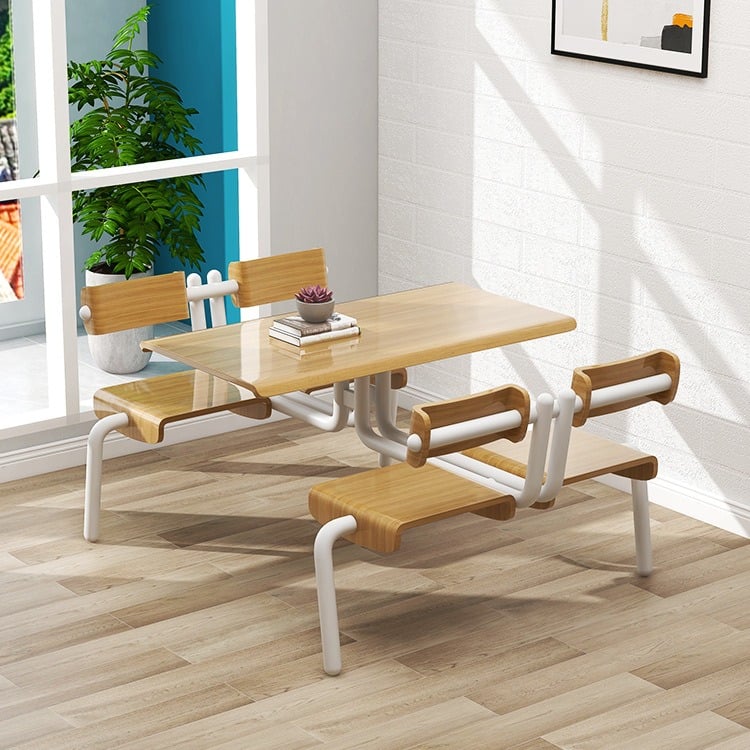
A bunk bed with desk combines a sleeping area and a work surface in one coordinated furniture unit. The bed is raised above or arranged beside the desk, allowing the same room footprint to support rest, study, or computer work. Understanding how a bunk bed with desk is laid out helps buyers assess whether it fits the room, user, and daily routine.
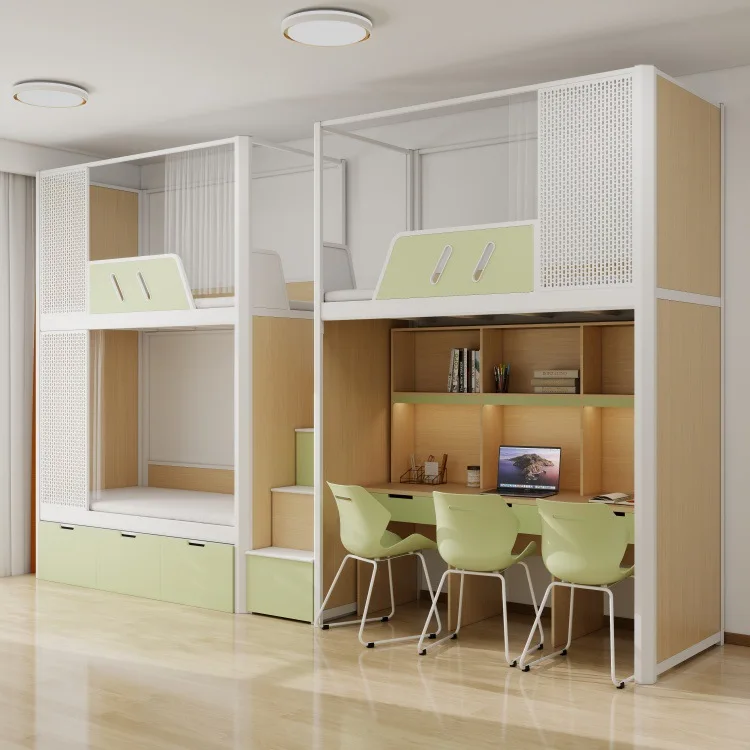
In many designs, the upper bunk sits above a built-in desk, while the frame supports both functions as a single structure. Other layouts place a desk beside the bed or combine the workspace with storage. A bunk bed with desk therefore describes a category of space-saving furniture, not one fixed design; the exact arrangement determines how it works in practice.
What the combined furniture includes
Sleeping platform and supporting frame
The sleeping section of a bunk bed with desk typically includes a mattress platform, guardrails on an elevated bed, a ladder or steps, and a frame that transfers weight to the floor. Its structure has to support the mattress and occupant while remaining stable during ordinary use. Buyers should review the stated capacity, mattress dimensions, and assembly instructions for the specific model.
The desk may sit directly beneath the upper bunk, at one end, or along the side of the frame. In an under-bed layout, the bunk bed with desk uses vertical space that might otherwise remain unused, while a side-mounted worktop can leave more open area below the bed. The location affects headroom, chair movement, access to the ladder, and how naturally the workspace fits the room.
Work surface and supporting details
A usable work area needs more than a flat panel. When assessing a bunk bed with desk, consider the depth and width of the surface, the space available for knees, and whether a chair can slide in without blocking a walkway. A laptop may need less room than books, paperwork, or equipment, so match the desk dimensions to the actual tasks.
Some designs include shelves, drawers, or a place to route cables, while others keep the worktop simple. These details can make a bunk bed with desk easier to organize, but storage should not obstruct the ladder, reduce access to the mattress, or crowd the user. Check where outlets are located and plan cable routing so cords do not cross walking paths or create a snagging hazard.
How the layout works day to day
Using vertical space without blocking movement
The main operating principle is vertical zoning: the bed occupies the upper level and the desk uses the floor area below or alongside it. A bunk bed with desk can keep sleeping and working functions in one footprint, which may be useful in a dormitory, compact apartment, or shared bedroom. Its real benefit depends on leaving adequate clearance for people to sit, stand, and move safely.
Before placing a bunk bed with desk, measure room length, width, and ceiling height, then account for the mattress, guardrail, and any overhead light or fan. Also measure the chair in its pulled-out position and keep the route to the door clear. A layout that fits on a floor plan may feel cramped once users, bedding, storage, and daily movement are included.
Connecting the desk to daily tasks
At the desk, users can study, read, or complete computer-based work, depending on the surface and available lighting. For a bunk bed with desk placed beneath an upper bunk, a task lamp may be needed because the bed can shade overhead light. Position lighting to reduce glare on screens and avoid placing hot lamps or electrical equipment where bedding can cover them.
A bunk bed with desk works best when the work zone has a clear purpose and can be reset easily. Keep frequently used items within reach, but avoid filling the surface until there is no space to write or use a keyboard. If the room serves more than one person, agree on where shared supplies go and how the chair and walkway remain available when the desk is not in use.
Choosing a suitable design and setting it up
Matching the unit to room and user
Selection begins with the people who will use the furniture and the room where it will stand. Compare the bunk bed with desk dimensions with the measured space, including door swings, windows, radiator positions, and access to storage. For shared accommodation, confirm whether the design actually provides the number of sleeping places required rather than assuming every bunk configuration is the same.
Comfort and access matter as much as footprint. Check the ladder position, guardrail arrangement, mattress limits, and recommended user age or weight restrictions in the product documentation. A bunk bed with desk should let the desk user sit with a comfortable posture and reach the work surface without leaning around structural parts. Confirm that the upper bunk can be entered and exited without moving the chair or desk contents.
Assembly, safety, and ongoing use
Because the bed and desk share a frame, correct assembly is essential to the unit functioning as intended. Follow the supplied instructions, use the specified hardware, and place the bunk bed with desk on an appropriate, level floor. Tighten connections as directed and recheck them during routine maintenance. Do not modify structural members or add loads beyond the stated limits.
Keep the area around the bunk bed with desk clear enough for safe climbing and chair movement. Use the guardrails and ladder as designed, keep heavy objects off elevated shelves, and follow the maker’s guidance on bedding and mattress thickness. Inspect the frame for loose fittings or visible damage, especially after moving the unit. If a component is unstable, stop using the affected area until it is corrected.
A careful final review can make the furniture more practical: check that the chair fits, lighting reaches the desk, and storage does not interfere with ventilation or access. The bunk bed with desk configuration can suit compact residential or student settings when dimensions and functions match the room. Confirm product specifications rather than relying on a general label alone.
FAQ
What is a bunk bed with desk?
A bunk bed with desk is a furniture unit that combines a bed, often elevated, with a work surface in the same footprint or frame. The bunk bed with desk may place the desk beneath the mattress platform, beside the bed, or in another integrated position. Design details vary, so review dimensions and included components.
How does a bunk bed with desk save space?
It uses vertical room area or a shared furniture footprint to provide sleeping and working zones without requiring separate full-size pieces. A bunk bed with desk saves useful floor space only if the chair, ladder, and access routes still fit comfortably. Measure the complete arrangement, including chair clearance, before deciding that a particular layout will work.
What should I check before buying one?
Check overall dimensions, ceiling clearance, mattress requirements, weight limits, desk size, access, and assembly guidance. For a bunk bed with desk, also consider lighting, cable placement, chair fit, and whether storage blocks movement. Match the configuration to the intended users and tasks, then confirm that the room can accommodate it safely.