
 EN
EN

When investing in a metal bed, durability is not simply a matter of how thick the steel looks at first glance. It involves a carefully considered combination of structural design, material quality, joinery precision, and surface treatment — each factor playing a distinct role in how long the frame will perform under daily use. Whether you are furnishing a residential bedroom, a student dormitory, a rental apartment, or a commercial hospitality setting, understanding which features actually determine long-term durability helps you make smarter procurement decisions and avoid costly replacements down the road.
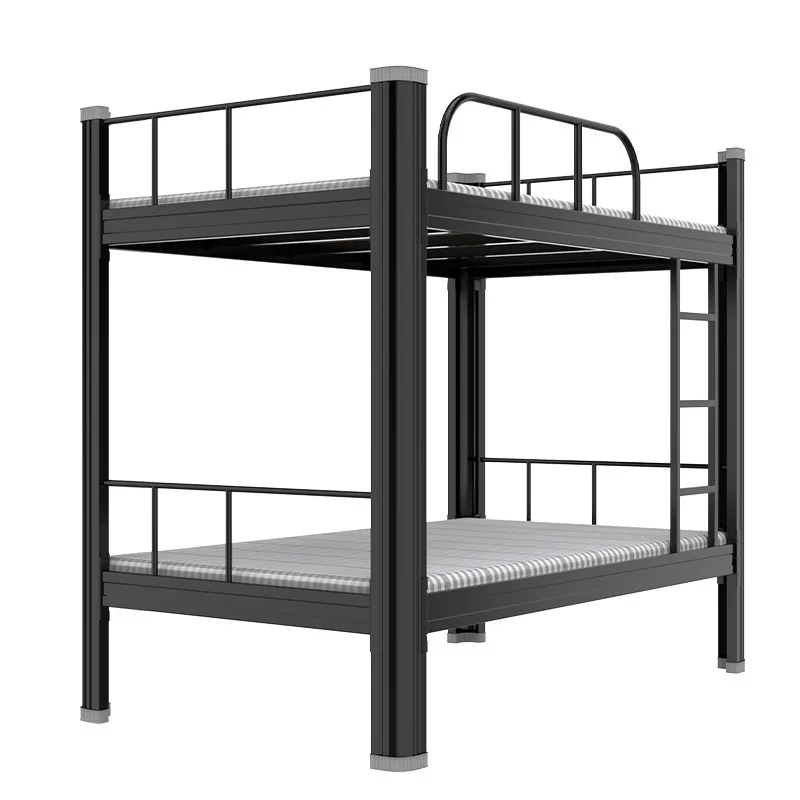
A metal bed that holds up over years of use is not an accident of manufacturing — it is the result of intentional engineering. From the gauge of the steel tubing to the welding technique used at load-bearing joints, every production decision contributes either to strength or to vulnerability. This article breaks down the specific features that matter most and explains why each one has a measurable impact on the lifespan and performance of a metal bed frame in real-world conditions.
Material Grade and Steel Gauge Selection
Why Steel Gauge Directly Affects Frame Strength
The gauge of steel used in a metal bed frame is one of the most fundamental durability indicators. Steel gauge refers to the thickness of the metal — a lower gauge number actually means thicker steel. Frames built from heavy-gauge steel tubing resist bending, warping, and fatigue stress far more effectively than those made with thin, lightweight stock.
In practical terms, a metal bed frame carrying the weight of a mattress and sleeper is subjected to repeated dynamic loads every single night. Over months and years, thinner steel will begin to flex microscopically, eventually leading to creaking, joint loosening, or even structural failure. Thicker gauge steel maintains its shape integrity under continuous load, preserving the frame's rigidity throughout its service life.
For institutional applications such as school dormitories, bunk beds, or rental properties where frames see heavy and consistent use, the steel gauge becomes even more critical. Procurement professionals in these sectors should explicitly request the gauge specification rather than relying on visual inspection alone.
The Role of Steel Alloy Composition
Beyond gauge, the specific alloy composition of the steel plays a meaningful role in how a metal bed responds to stress and environmental exposure. Higher-carbon steel offers greater hardness and tensile strength, making it more resistant to deformation under load. Alloys with manganese or chromium content further enhance strength and corrosion resistance.
For wrought iron beds in particular, the material composition defines much of the ornamental and structural character of the frame. Wrought iron is known for its fibrous grain structure, which gives it excellent resistance to impact and vibration — qualities that make it particularly well-suited for decorative yet durable metal bed applications in both residential and commercial interiors.
When evaluating supplier specifications, ask for material certification data rather than relying on generic product descriptions. A verified steel grade ensures that the metal bed frames you procure will deliver consistent performance across bulk orders.
Welding Quality and Joint Construction
Load-Bearing Joints as Critical Structural Points
The joints and welds of a metal bed frame are where structural failure most commonly begins. Every connection point — where side rails meet the headboard posts, where center support legs anchor to the main rails, where cross-slats attach to the frame body — must withstand both static weight and dynamic movement forces.
High-quality welding creates seamless, deeply penetrating bonds between steel components. A properly executed MIG or TIG weld produces a joint that can be stronger than the base material itself. In contrast, shallow or incomplete welds create stress concentration points where cracks initiate over time, particularly when the metal bed is moved frequently or used in bunk bed configurations where the upper sleeper adds significant vertical and lateral forces.
Inspecting weld quality visually involves looking for smooth, consistent bead lines without porosity, undercutting, or burn-through marks. Reputable manufacturers subject their metal bed frames to weld pull tests and load-cycle tests to validate joint integrity before products reach the market.
Reinforcement Features at High-Stress Zones
Beyond basic welding, thoughtful frame engineering adds reinforcement gussets, corner brackets, or secondary support tubes at zones that experience the highest mechanical stress. In a standard double bed or queen-size metal bed, the center support system is particularly important because it bears the most concentrated load from both the mattress and the sleeper.
Frames designed with integrated center legs or adjustable center support rails distribute the load more evenly across the floor contact points, reducing the bending moment applied to the main side rails. This design principle becomes essential for loft beds and bunk beds, where height amplifies the mechanical leverage forces acting on every joint in the metal bed structure.
When sourcing metal bed frames for apartment buildings or dormitory environments, verifying that the frame design incorporates proper center support and reinforcement zones is a non-negotiable quality standard.
Surface Treatment and Corrosion Resistance
Powder Coating Versus Paint Finishes
Surface treatment is not merely an aesthetic consideration — it has a direct and significant impact on the longevity of a metal bed frame. Bare steel corrodes when exposed to moisture, humidity, and even the natural oils from human contact. A compromised surface coating creates rust initiation sites that weaken the steel over time and degrade the visual quality of the frame.
Powder coating is widely regarded as the superior surface treatment option for a durable metal bed. In the powder coating process, electrostatically charged dry powder is applied to the steel surface and then cured under heat, creating a thick, uniform, and chemically bonded protective shell. This layer resists chipping, scratching, and UV degradation far better than conventional liquid paint.
Standard wet paint finishes, while less expensive to apply, are more susceptible to impact chips and moisture infiltration. Once a wet-painted metal bed frame develops a small chip, oxidation spreads beneath the paint layer, lifting and bubbling the finish and accelerating structural corrosion from within.
Pre-Treatment Processes That Enhance Coating Adhesion
The durability of any surface coating on a metal bed frame is only as strong as the surface preparation beneath it. Leading manufacturers use phosphate conversion coating or shot-blasting pre-treatment processes to clean and microscopically roughen the steel surface before applying the final finish. These pre-treatments dramatically improve adhesion and corrosion resistance.
A metal bed frame that has undergone proper phosphate pre-treatment followed by powder coating can achieve salt-spray corrosion resistance ratings measured in hundreds or even thousands of hours — far exceeding frames that receive only a direct paint application without surface preparation.
For buyers sourcing metal bed frames for coastal environments, high-humidity climates, or commercial facilities where regular cleaning with chemical agents occurs, the pre-treatment specification is a critical procurement criterion that should be confirmed in supplier documentation.
Frame Design Geometry and Structural Logic
How Frame Geometry Determines Load Distribution
The geometry of a metal bed frame — meaning the specific angles, proportions, and configuration of structural members — determines how forces are transmitted through the frame and into the floor. A well-engineered frame geometry minimizes bending stress in individual members by ensuring that loads travel through the frame in a primarily axial direction rather than creating large bending moments.
For example, loft bed and bunk bed designs must manage not just vertical compressive loads from the sleeper's weight but also lateral forces generated by movement, sitting on the edge of the bed, or climbing the ladder. A metal bed frame designed with diagonal bracing members or triangulated structural geometry handles these lateral forces much more effectively than a simple rectangular tube frame without any cross-bracing.
Modern design double beds with slimmer profiles can still achieve excellent structural rigidity if the geometry is engineered correctly, using strategically placed reinforcement rather than simply adding more material mass. This approach allows for aesthetically refined metal bed designs that do not sacrifice functional performance.
Slat System Design and Mattress Support Compatibility
A frequently overlooked aspect of metal bed durability is the design of the slat or platform support system. The slats are the interface between the frame and the mattress, and their spacing, thickness, and attachment method all influence how evenly load is distributed across the frame's side rails.
Metal slat systems that are welded directly to the side rails create a fully unified structure with no loose components to rattle or displace over time. Frames with bolted or clip-attached slats require periodic tightening and inspection to prevent the slats from shifting and creating uneven pressure points on the metal bed side rails.
The slat spacing also matters for mattress longevity and comfort. Proper support prevents mattress sagging and also reduces the dynamic bending forces applied to the frame rails with every movement. A well-designed slat system is an integral part of a durable metal bed frame system, not simply an afterthought added to complete the product.
Hardware, Assembly, and Long-Term Fastener Integrity
Fastener Quality and Anti-Loosening Design
Many metal bed frames use bolted connections for the headboard, footboard, and side rail assembly to allow for flat-pack shipping and convenient installation. The quality of these fasteners — bolts, nuts, and connection brackets — has a direct bearing on how well the frame maintains its structural integrity over time.
Cheap, low-grade fasteners are prone to stretching, stripping, or corroding. When fasteners lose their clamping force, joints begin to flex with each movement cycle, generating the characteristic squeaking noise that many users associate with aging metal bed frames. Over time, this micro-movement at joints causes the contact surfaces to wear, further accelerating loosening in a destructive feedback cycle.
High-quality metal bed frames use Grade 8 or equivalent hardened steel fasteners combined with anti-loosening features such as nylon-insert locknuts, spring washers, or thread-locking compounds applied at the factory. These features maintain joint clamping force under the vibration and movement loads that characterize everyday bed use.
Assembly Design Tolerance and Fit Precision
The dimensional precision of a metal bed frame's assembly components matters more than many buyers realize. When connection brackets, rail hooks, or leg sockets are manufactured with loose dimensional tolerances, the assembled frame has inherent play at every joint — even before any usage wear has occurred.
Precision-machined or precision-stamped connection hardware ensures that every joint fits snugly, maximizing contact surface area and minimizing relative movement between parts. A metal bed frame assembled from tightly toleranced components feels solid and quiet from the first night of use and maintains that quality over its service life.
For bulk procurement contexts — such as outfitting an entire apartment complex or school dormitory — the consistency of assembly fit across hundreds or thousands of metal bed frames reflects the manufacturing quality control processes of the supplier and should be evaluated through pre-shipment inspection protocols.
FAQ
What steel gauge should I look for in a durable metal bed frame?
For general residential use, a metal bed frame made from 16-gauge to 14-gauge steel tubing offers a good balance of strength and weight. For heavier-duty applications such as bunk beds, dormitory beds, or commercial hospitality settings, 14-gauge or lower (thicker) steel is recommended. Always request the gauge specification from the supplier rather than relying on visual impressions alone.
Is powder coating really necessary for a metal bed frame?
Yes, powder coating significantly extends the surface durability and corrosion resistance of a metal bed frame. Compared to standard liquid paint, powder coating is more resistant to chipping, humidity, and abrasion. It is especially important in high-use environments or humid climates where unprotected steel would corrode and weaken rapidly over time.
How do I know if the welds on a metal bed frame are high quality?
High-quality welds on a metal bed frame should appear smooth, consistent, and free of visible gaps, pitting, or rough edges. Reputable suppliers provide test documentation such as weld pull-test results or load-cycle test reports. For large procurement volumes, requesting pre-shipment quality inspection that specifically examines weld integrity is a prudent step.
Are bunk beds and loft beds harder to keep durable than standard metal beds?
Bunk beds and loft beds do place greater structural demands on the metal bed frame due to elevated height, ladder loads, and upper-bunk dynamic forces. However, a well-engineered bunk or loft frame — with proper diagonal bracing, heavy-gauge steel, high-quality welds, and reinforced joinery — can be equally durable. The key is ensuring that the design specifically accounts for the additional mechanical demands of elevated sleeping configurations.