
 EN
A bunk bed with desk combines an elevated sleeping space with a work area below, so its safety depends on more than a sturdy frame. Buyers should assess fall prevention, reliable access, structural stability, and hazards around the desk. A safe bunk bed with desk supports ordinary movement without creating avoidable risks during sleep, study, or cleaning. The right features should suit the intended user, room, and daily routine.
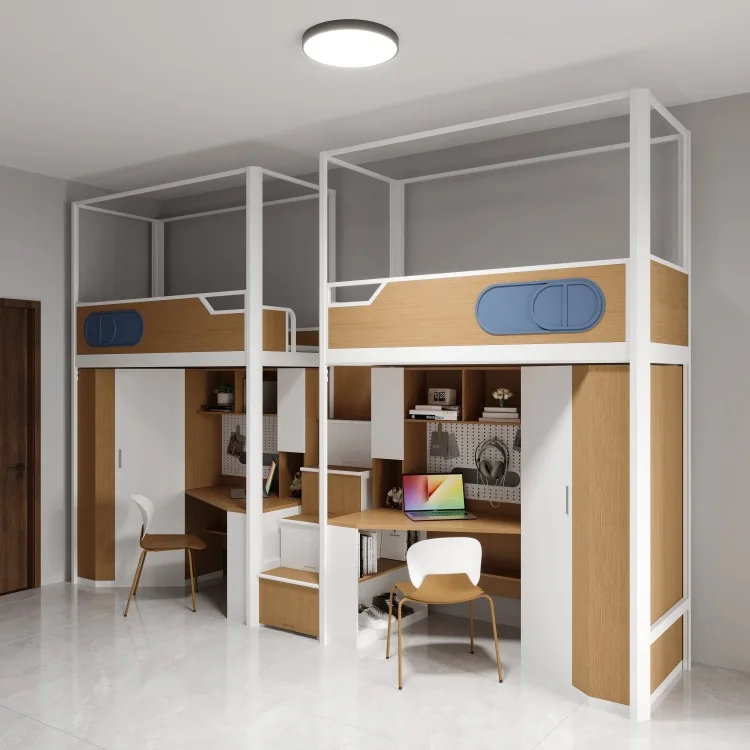
Before selecting a bunk bed with desk, consider who will use the upper bunk and whether they can climb safely and follow the bed’s age and weight guidance. Inspect the design as a connected system: guardrails, ladder, mattress, frame, and desk placement affect one another. This guide explains the safety features to check and how they protect users in a dormitory, bedroom, or other compact space.
Fall protection and safe upper-bunk access
Guardrails that reduce fall risk
A bunk bed with desk should have secure guardrails along the exposed sides of the upper sleeping platform. Check that rails are continuous where needed, firmly attached, and high enough above the specified mattress surface to help prevent a sleeper from rolling out. Openings should not create entrapment hazards, and the design should follow applicable safety requirements for the intended market. A bunk bed with desk is only as protective as the rail installation and fit.
Confirm the mattress size and maximum thickness specified for the bunk bed with desk, because a mattress that sits too high can reduce the effective guardrail height. The mattress should fit the platform without large gaps around its edges. Look closely at corners, joints, and rail ends for spaces that could catch clothing or a user. For ongoing protection, recheck the rail fasteners after assembly and whenever the bed is moved or adjusted.
A ladder designed for controlled climbing
The ladder on a bunk bed with desk should be firmly fixed, stable underfoot, and positioned so a user can climb without twisting around furniture. Rungs need to offer a dependable foothold, while the handhold or ladder profile should make ascent and descent manageable. Check whether the ladder is compatible with the bed’s configuration and whether it obstructs the desk chair or a room walkway. A bunk bed with desk should make the route to the upper bunk clear.
Think about how users will climb at night, when visibility may be low and attention is reduced. Keep the ladder area free of bags, cables, and desk accessories, and consider gentle room lighting that does not create glare. A bunk bed with desk should not require a user to step onto the desk, chair, or nearby furniture to reach the mattress. If children will use the bed, follow age guidance and explain safe climbing habits.
Frame stability and durable construction
Connections, support, and load guidance
A bunk bed with desk needs a frame that remains stable during normal use, including climbing, sitting, and working at the desk. Examine welds, bolts, brackets, and support rails for secure connections and a clean finish. The bed should include clear assembly instructions and state applicable weight limits for sleeping surfaces. Do not assume a heavy-looking frame is safe without checking its construction details. A bunk bed with desk must be assembled with the supplied hardware and in the recommended sequence.
The upper and lower sections of a bunk bed with desk experience different forces, so assess the full structure rather than just the desktop or bed platform. Floor contact points should sit evenly, and adjustable feet, if supplied, should be set as directed. Avoid modifications such as drilling new holes or replacing fasteners with unapproved parts. Once assembled, test for unexpected movement without overloading the frame; tighten connections as specified by the care instructions.
Materials, edges, and maintenance checks
Inspect a bunk bed with desk for sharp edges, protruding fasteners, splinters, or rough welds that could cause cuts or snag clothing. Coatings and finishes should be suitable for indoor furniture use and intact where users touch the frame. Rounded or protected edges around the work surface can reduce bumps in a compact room. A bunk bed with desk should also leave enough clearance for safe movement around its frame and for access to the desk.
Routine inspection helps identify loosened fittings, cracked components, or wear before these issues become serious. Check the bunk bed with desk after assembly, after relocation, and at intervals recommended by the maker. Pay attention to joints that move when a user climbs and to any change in the frame’s sound or stability. Stop using the affected area if damage appears, and arrange an appropriate repair rather than improvising a structural fix.
Desk-area hazards and everyday fit
Electrical and workspace organization
The desk on a bunk bed with desk introduces cables, lamps, chargers, and small equipment near the sleeping structure. Route cords away from the ladder, walking path, and any moving parts, and avoid pinching them between the frame and wall. Use electrical devices according to their instructions, and do not overload outlets or leave heat-producing equipment unattended. A bunk bed with desk should provide a work area that stays organized rather than turning access routes into trip hazards.
A lamp or monitor should be positioned so it cannot fall onto the sleeper or block access to the ladder. Keep liquids away from electrical equipment and from the edge of the desk, where spills could affect the frame or floor. The user should be able to sit and stand without striking the upper structure. When planning a bunk bed with desk, check the desk dimensions, chair clearance, outlet location, and cable path together before installation.
Room layout and user suitability
Measure the room before placing a bunk bed with desk, including ceiling height, door swing, windows, heating equipment, and circulation space. The upper bunk needs enough clearance for a user to sit without hitting the ceiling, while the bed must not block exits or access to emergency routes. Follow instructions about placement near ceiling fans, lights, and windows. A bunk bed with desk should fit the room without forcing unsafe climbing or awkward movement.
Match the bunk bed with desk to the user’s age, mobility, and ability to use the ladder safely. A person who has difficulty climbing may need a different sleeping arrangement, even if the desk configuration fits the room. Explain that the upper bunk is for sleeping, not jumping or rough play, and discourage hanging items from guardrails. Keep the desk chair tucked away when unused so it does not interfere with climbing or create a collision hazard.
FAQ
What guardrail details matter most?
Check that guardrails are secure, appropriately positioned, and compatible with the specified mattress thickness. The bunk bed with desk should have no unsafe gaps or loose rail sections, and the assembly should match the instructions. Inspect the rails periodically, especially after moving the bed or tightening other connections.
Can the desk be used for electrical equipment?
Yes, if devices are used as directed and cords are kept clear of the ladder and walkways. Organize cables so they cannot snag or become trapped, and keep liquids away from electronics. A bunk bed with desk needs a tidy work area that does not compromise access or create avoidable heat and electrical hazards.
How often should the bed be checked?
Inspect the bunk bed with desk after assembly, after relocation, and on a regular schedule based on the care guidance. Look for loose fasteners, damaged rails, unstable supports, and sharp or worn areas. Address problems promptly and do not use a damaged component until it has been repaired appropriately.