
 EN
EN
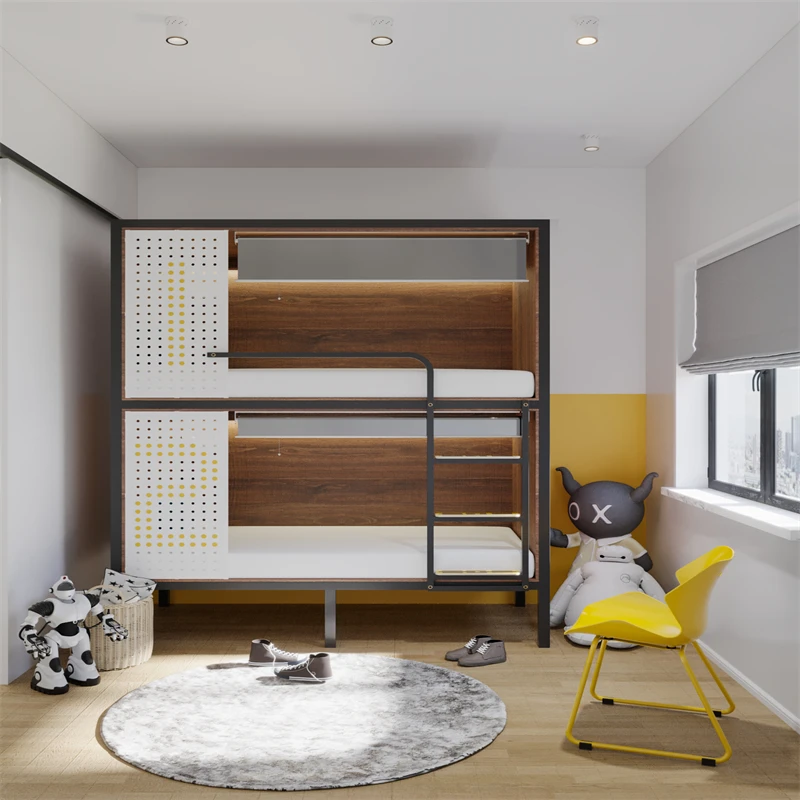
The fundamental design and engineering of bunk bed structure plays a critical role in determining how well these space-saving furniture solutions perform under constant daily use. Whether installed in dormitories, hotels, or residential settings, the structural integrity of bunk beds must withstand repeated climbing, shifting weight, and prolonged occupancy. Understanding the key components that contribute to bunk bed structure stability helps facility managers, parents, and procurement professionals make informed decisions when selecting appropriate sleeping solutions for high-traffic environments.
Modern manufacturing techniques have evolved significantly to address the unique challenges posed by elevated sleeping arrangements. The materials, joint connections, and support systems integrated into contemporary bunk bed structure designs directly impact their longevity and safety performance. Facilities experiencing high turnover rates or accommodating users of varying sizes must carefully evaluate how different structural approaches handle dynamic loading conditions and repetitive stress cycles.
The economic implications of choosing appropriate bunk bed structure configurations extend beyond initial purchase costs. Poorly designed frames often require frequent maintenance, replacement components, or complete replacement within shorter timeframes. Conversely, robust structural engineering can deliver decades of reliable service while maintaining safety standards and user satisfaction across diverse institutional and commercial applications.
Material Selection Impact on Structural Performance
Metal Frame Advantages in High-Use Environments
Steel and aluminum alloys dominate commercial bunk bed structure applications due to their superior strength-to-weight ratios and resistance to deformation under stress. Metal frames distribute loads more effectively across the entire structure, preventing localized stress concentrations that commonly cause failures in wood-based alternatives. The inherent properties of metal allow for thinner profile designs while maintaining structural integrity, resulting in more space-efficient sleeping solutions.
Welded steel construction creates continuous load paths throughout the bunk bed structure, eliminating potential weak points associated with mechanical fasteners. Professional-grade welding techniques ensure joints maintain their strength characteristics even after thousands of loading cycles. The consistent material properties of steel provide predictable performance under varying environmental conditions, making metal frames particularly suitable for institutional applications where reliability is paramount.
Advanced powder coating and galvanization processes protect metal bunk bed structure components from corrosion and wear, extending service life significantly compared to untreated materials. These protective finishes also facilitate easier cleaning and maintenance protocols, which proves essential in healthcare, hospitality, and educational facilities where hygiene standards must be rigorously maintained.
Wood Construction Considerations and Limitations
Traditional wooden bunk bed structure designs rely heavily on mechanical fasteners and adhesive joints, creating multiple potential failure points under repetitive loading. Wood's natural tendency to expand and contract with humidity changes can gradually loosen connections, compromising structural integrity over time. While solid hardwoods offer reasonable strength characteristics, they typically require more robust dimensions to achieve equivalent load-bearing capacity compared to metal alternatives.
Engineered wood products like plywood and laminated veneer lumber provide more consistent strength properties than solid wood in bunk bed structure applications. These manufactured materials resist warping and splitting better than natural wood while offering improved dimensional stability. However, the adhesives used in engineered wood can degrade over time, particularly in high-humidity environments, potentially leading to delamination and structural weakness.
The maintenance requirements for wooden bunk bed structure typically exceed those of metal alternatives, as periodic tightening of fasteners and inspection of joint conditions becomes necessary to maintain safety standards. Wood surfaces also show wear patterns more readily than metal finishes, potentially creating aesthetic concerns in commercial environments where appearance standards must be maintained.
Joint Design and Connection Methods
Welded Versus Bolted Assembly Systems
Welded connections in bunk bed structure create permanent, monolithic assemblies that distribute stresses seamlessly across joined components. The continuous material transition at welded joints eliminates stress concentration points that can develop at discrete fastener locations. Professional welding techniques ensure consistent penetration and fusion, creating joints that often exceed the strength of the base materials themselves.
Bolted assembly systems offer advantages in terms of transportability and field maintenance but introduce multiple potential failure modes in bunk bed structure designs. Each bolt represents a discrete load transfer point where stress concentrations can develop, particularly under dynamic loading conditions. The clamping force provided by properly torqued bolts must be maintained over time, requiring periodic inspection and retightening to prevent loosening due to vibration and thermal cycling.
Hybrid approaches combining welded primary structures with bolted secondary connections provide optimal balance between structural performance and practical considerations. This bunk bed structure methodology allows critical load-bearing joints to benefit from welded strength while enabling disassembly for transportation or reconfiguration as needed. The strategic placement of mechanical fasteners in low-stress locations minimizes their impact on overall structural integrity.
Reinforcement Strategies for High-Stress Areas
Corner connections represent the most critical stress concentration points in any bunk bed structure, as they must transfer loads between vertical and horizontal members while accommodating multi-directional forces. Gusset plates and corner brackets distribute these concentrated loads across larger surface areas, reducing peak stresses and improving fatigue resistance. The geometry and material thickness of reinforcement elements must be carefully engineered to match the load characteristics of the specific application.
Ladder attachment points experience significant dynamic loading as users climb up and down, creating both vertical and lateral forces that can stress the bunk bed structure. Reinforced mounting brackets with multiple attachment points help distribute these loads across broader frame areas, preventing localized failures. The integration of ladder reinforcements with the main structural framework ensures optimal load transfer and long-term reliability.
Cross-bracing systems add significant torsional rigidity to bunk bed structure assemblies, preventing frame distortion under asymmetric loading conditions. Diagonal braces create triangulated geometry that resists lateral deflection and maintains structural alignment even when occupants move around on the sleeping surfaces. The strategic placement of cross-braces must balance structural benefits with accessibility and aesthetic considerations.
Load Distribution and Support Systems
Mattress Support Platform Engineering
The mattress support system forms a critical component of overall bunk bed structure performance, as it must distribute occupant weight evenly across the frame while providing adequate comfort and ventilation. Slat-based systems offer excellent ventilation characteristics and flexible support but require careful spacing and attachment methods to prevent sagging or failure under concentrated loads. The material selection and cross-sectional dimensions of support slats directly influence their load-bearing capacity and deflection characteristics.
Solid platform supports provide maximum load distribution capabilities in bunk bed structure designs but may compromise mattress ventilation and add significant weight to the assembly. Perforated metal platforms offer a compromise solution, combining excellent load distribution with adequate airflow while maintaining relatively low weight. The perforation pattern and hole sizing must be optimized to balance structural performance with ventilation effectiveness.
Adjustable support systems accommodate varying mattress thicknesses and firmness preferences while maintaining proper support characteristics. These systems typically incorporate multiple attachment points along the bunk bed structure frame, allowing fine-tuning of support platform height and angle. The adjustment mechanisms must be designed to maintain secure positioning under dynamic loading while remaining accessible for maintenance and reconfiguration.
Weight Capacity Considerations and Safety Factors
Determining appropriate weight capacities for bunk bed structure designs requires careful analysis of both static and dynamic loading conditions. Static loads include the weight of occupants, bedding, and personal items, while dynamic loads result from movement, climbing, and sudden impacts. Safety factors typically range from 3:1 to 5:1 depending on the application, ensuring adequate strength margins for unexpected loading scenarios.
The distribution of weight across multiple occupancy points in bunk bed structure assemblies creates complex loading patterns that must be considered during design validation. Upper bunk loading creates additional overturning moments that must be resisted by the base structure and any required anchoring systems. Computer-aided engineering analysis helps optimize material distribution and identify potential weak points before physical testing and production.
Testing protocols for bunk bed structure validation typically include both static loading tests and cyclic fatigue testing to simulate long-term use conditions. These tests verify that structures can safely support specified loads while maintaining dimensional stability and joint integrity over extended periods. Compliance with relevant safety standards ensures adequate performance margins for real-world applications.
Environmental Factors Affecting Structural Integrity
Humidity and Temperature Cycling Effects
Environmental conditions significantly impact the long-term performance of bunk bed structure components, particularly in institutional settings where climate control may be limited. Humidity fluctuations cause dimensional changes in both metal and wood components, potentially affecting joint tightness and alignment over time. Metal frames may experience thermal expansion and contraction that can stress connection points, while wooden components are more susceptible to moisture-related swelling and shrinkage.
Corrosion represents a primary concern for metal bunk bed structure assemblies in high-humidity environments such as coastal locations or poorly ventilated dormitories. Protective coatings must be carefully selected and applied to provide long-term protection against moisture infiltration and chemical exposure. Regular inspection and maintenance protocols help identify coating deterioration before it progresses to structural damage.
Temperature cycling can affect the mechanical properties of both metals and adhesives used in bunk bed structure construction. Repeated heating and cooling cycles may cause fatigue damage in highly stressed components, while extreme temperatures can alter the performance characteristics of protective coatings and joint compounds. Design considerations must account for the expected temperature range of the installation environment.
Chemical Exposure and Cleaning Protocol Impacts
Commercial cleaning products used in institutional settings can chemically interact with bunk bed structure materials and finishes, potentially causing degradation over time. Harsh disinfectants and sanitizers may attack protective coatings or cause stress corrosion cracking in susceptible metal alloys. Material selection must consider the chemical compatibility with expected cleaning protocols and maintenance procedures.
Frequent cleaning with abrasive materials or high-pressure washing can gradually wear away protective finishes on bunk bed structure surfaces, exposing underlying materials to environmental attack. Design features that facilitate easy cleaning while protecting vulnerable areas help maintain structural integrity throughout the service life. Sealed joints and smooth surface transitions reduce contamination accumulation and simplify maintenance procedures.
The selection of cleaning-compatible materials and finishes for bunk bed structure applications requires balancing durability with hygiene requirements. Antimicrobial coatings may provide additional protection in healthcare applications but must be evaluated for their impact on structural performance and longevity. Regular testing of cleaning protocol compatibility ensures continued effectiveness without compromising safety.
Maintenance Requirements and Lifecycle Considerations
Preventive Maintenance Scheduling
Establishing regular maintenance schedules for bunk bed structure assemblies helps identify potential problems before they develop into safety concerns or expensive repairs. Visual inspections should focus on joint conditions, surface finishes, and signs of wear or damage that could compromise structural integrity. Documentation of inspection findings and maintenance actions provides valuable data for optimizing replacement schedules and design improvements.
Torque verification for mechanical fasteners in bunk bed structure assemblies should be performed at specified intervals to ensure continued joint integrity. Vibration and thermal cycling can gradually loosen connections, reducing the clamping force and potentially allowing movement between components. Standardized torque specifications and proper tools ensure consistent maintenance quality across large installations.
Lubrication of moving parts such as adjustment mechanisms and folding components helps maintain smooth operation while preventing accelerated wear. The selection of appropriate lubricants must consider environmental conditions, temperature ranges, and compatibility with existing materials. Regular lubrication schedules prevent binding and ensure continued functionality throughout the service life of the bunk bed structure.
Replacement Part Availability and Standardization
Long-term maintenance of bunk bed structure assemblies depends heavily on the availability of replacement components and standardized fasteners. Manufacturers who maintain inventory of critical parts and provide detailed assembly documentation support more cost-effective lifecycle management. Standardized connection methods and common fastener sizes simplify maintenance procedures and reduce inventory requirements.
Modular design approaches in bunk bed structure systems enable selective replacement of worn or damaged components without requiring complete assembly replacement. This approach reduces downtime and maintenance costs while extending the overall service life of the installation. Component-level replacement also supports sustainability objectives by minimizing waste generation.
Documentation of original specifications and approved replacement parts ensures continued safety and performance standards throughout the bunk bed structure lifecycle. Changes in materials or component designs must be carefully evaluated for compatibility with existing assemblies to prevent introducing new failure modes or reducing safety margins.
FAQ
What factors most significantly impact bunk bed structure stability
The most critical factors affecting bunk bed structure stability include material selection, joint design quality, and proper weight distribution systems. Steel construction typically provides superior stability compared to wood alternatives due to higher strength-to-weight ratios and more consistent material properties. Welded joints offer better long-term stability than bolted connections, while proper cross-bracing and reinforcement at stress concentration points significantly enhance overall structural integrity under frequent use conditions.
How often should bunk bed structures be inspected for safety
Professional inspections of bunk bed structure assemblies should occur at least quarterly in high-use institutional settings, with monthly visual checks performed by facility staff. Daily user inspections focusing on obvious damage, loose components, or unusual sounds during use provide early warning of developing problems. Any signs of joint loosening, frame distortion, or surface damage should trigger immediate detailed inspection by qualified maintenance personnel to prevent potential safety incidents.
What weight capacity should be specified for commercial bunk beds
Commercial bunk bed structure weight capacities should typically accommodate at least 250 pounds per sleeping surface with appropriate safety factors applied. Institutional applications may require higher capacities up to 400 pounds to accommodate varying user demographics and temporary loading conditions. The specified capacity must account for both static loads and dynamic loading from user movement, with safety factors of 3:1 to 5:1 commonly applied depending on the specific application and relevant safety standards.
Which maintenance tasks are most critical for preserving structural integrity
Regular torque verification of mechanical fasteners represents the most critical maintenance task for preserving bunk bed structure integrity over time. Visual inspection of joint conditions, surface finishes, and structural alignment should be performed systematically to identify developing problems before they compromise safety. Proper cleaning with compatible products and prompt repair of coating damage help prevent corrosion and material degradation that can weaken structural components over extended service periods.